
Key Takeaways
- Panama Canal daily transits dropped to 32 starting September 15, 2026, after watershed rainfall came in well below average, tightening capacity for Asia-to-Gulf cargo. The canal authority has since said transits will rise to 33 starting October 15, 2026, following improved rainfall and a restored maximum draft of 49 feet.
- Ocean carriers have already added canal surcharges to invoices. MSC’s Panama Canal Surcharge is $149 per 20-foot container, $297 per 40-foot container, and $376 per 45-foot container, effective September 12, and CMA CGM’s Panama Canal Adjustment Factor reached $500 per TEU effective September 10, both applying to Gulf Coast-bound freight.
- A West Coast land bridge can move a Singapore-to-New York container in around 19 days, compared to 21 to 36 days through the Panama Canal, though the right lane depends on how much schedule risk a shipment can absorb.
- Rising canal fees are narrowing the cost gap between land bridge and all-water shipping, changing the math for importers who assumed direct-to-port was always cheaper.
Importers moving freight from Asia to the Gulf Coast face a routing question that has gotten more expensive to answer wrong. Panama Canal capacity has been shrinking just as carriers add new surcharges to Asia-origin cargo, and both trends land squarely on shipments headed for Houston. Carrier services like Excargo Services have fielded more questions lately from importers trying to decide whether to keep routing direct through the canal or start pricing out a West Coast land bridge instead.
Panama Canal Cuts Force a Decision
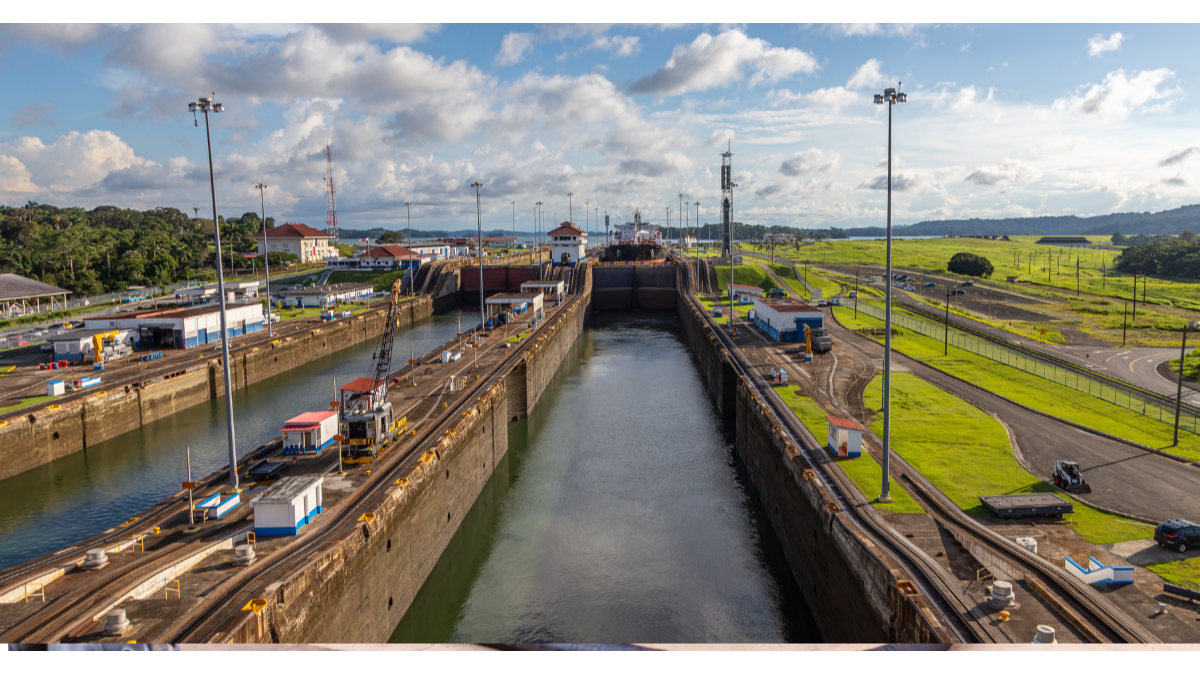
For years, a shipment bound for a Gulf port like Houston had one obvious path: load it on a vessel in Asia, transit the Panama Canal, and let it ride the rest of the way by ship. That default has gotten harder to justify. Watershed rainfall around the canal came in far below its historical average this year, and the Panama Canal Authority responded by trimming how many vessels can pass through each day.
The timing matters because it collides with an already tight freight market. Oil and gas shippers moving equipment on fixed project schedules, retailers stocking up ahead of peak season, and any exporter with a contractual delivery window now have to treat canal capacity as a variable instead of a constant. That shift has pushed a wider look at land bridge options that would have seemed unnecessary just a year ago.
Land Bridge vs. Direct-to-Port, Defined
Picture a container leaving a factory near Shenzhen, bound for a warehouse in Dallas. There are two ways it gets there. It can stay on a ship the entire way, transiting the Panama Canal before reaching a Gulf port, or it can come ashore on the West Coast and finish the transit over land by rail.
How a West Coast Land Bridge Works
A land bridge move puts a container on a vessel bound for a West Coast port such as Los Angeles or Seattle, then transfers it onto a train for a cross-country rail run before final delivery by truck. The concept isn’t new, but it’s drawing fresh interest because it sidesteps the canal entirely. Freight moving this way typically clears the ocean leg faster, then covers the rest of the distance on rail lines built for long-haul, high-volume movement.
Why Direct-to-Port Still Means the Canal
Direct-to-port sounds like the simpler, more predictable choice, and for cargo bound for U.S. West Coast or East Coast ports without a canal transit, it often is. For Gulf ports like Houston, direct-to-port shipping usually still means passing through the Panama Canal. That’s an easy detail to overlook, and it means Gulf-bound importers who assume they’re insulated from canal disruptions are often not. Whatever happens at the locks touches direct-to-port cargo just as much as it touches anything else moving through that waterway.
Inside the 2026 Canal Restrictions
The Panama Canal Authority issued an advisory on August 20, 2026, that reshaped how much cargo can move through the canal in the months ahead. The cause traces back to weather: rainfall across the canal watershed ran 34% below the historical average from May through August, pulling down water levels that the locks depend on for every transit.
Locks Slots Cut to 32 Daily Transits
Daily transit slots dropped to 34 for booking dates from September 4, then fell again to 32 starting September 15. The August number mostly formalized where traffic already stood, since the canal had been averaging close to that level through July anyway. On September 28, 2026, the canal authority announced daily transits will rise from 32 to 33 starting October 15, 2026, citing improved rainfall and a restored maximum draft of 49 feet. Conditions had tightened sharply through September, and this latest adjustment suggests some easing, though shippers planning winter volume should still expect capacity to stay below pre-2026 levels.
Draft Cuts Delayed, Not Cancelled
The same August advisory pushed back a scheduled draft reduction. A planned cut to 48 feet moved from late August to September 2, and a further cut to 47.5 feet, originally set for early September, was postponed indefinitely as of September 4. Fewer ships can cross each day, but the ones that do can sit deeper in the water and carry more cargo, softening the impact of the reduced transit count. It’s a deliberate trade-off by the canal authority, and it buys shippers more breathing room than the raw transit numbers suggest on their own, a cushion that has only grown with the draft restored to 49 feet.
Carrier Surcharges Are Already Billed
Canal restrictions are one thing on paper and another thing on an invoice, and ocean carriers moved fast to reprice the risk. Anyone shipping Asia-origin cargo to the Gulf Coast this fall is likely already seeing these charges show up, whether or not their shipment has actually been delayed.
MSC and CMA CGM Raise Panama Fees
Two of the largest carriers on the trans-Pacific to Gulf Coast lane have both added canal-specific fees. MSC’s Panama Canal Surcharge, effective September 12, 2026, runs $149 per 20-foot container, $297 per 40-foot container, and $376 per 45-foot container, applying to shipments from Southeast Asia, China, Korea, and Japan bound for the U.S. East and Gulf Coast. CMA CGM’s Panama Canal Adjustment Factor climbed to $500 per TEU effective September 10, 2026, covering all cargo types moving from the Far East to the U.S. East and Gulf Coast via the canal.
Both surcharges apply directly to Houston-bound freight, since that cargo typically transits Panama on its way in. Whatever the transit caps do next, these costs are already locked into current rate sheets for anyone booking Asia-to-Gulf shipments.
Weighing Transit Time Against Cost
Cost is only half the equation. The other half is how long cargo actually takes to arrive, and that comparison has shifted enough this year to change some shippers’ default routing.
Singapore-to-New York: Days Saved by Rail
A container moving from Singapore to New York illustrates the gap well. Routed all-water through the Panama Canal, that shipment can take anywhere from 21 to 36 days depending on conditions at the locks. Put the same box on a West Coast land bridge instead, moving through a port like Seattle and across by rail through Chicago, and the trip runs closer to 19 days. That’s a meaningful window for any shipper working against a firm delivery date or trying to avoid carrying extra safety stock.
Why the Cost Gap Is Narrowing
Land bridge routing has traditionally cost more per container than an all-water move, which is exactly why direct-to-port stayed the default for so long. That calculation is changing now that canal surcharges are adding several hundred dollars per container to all-water rates. Once those fees get factored in, the price difference between the two lanes shrinks. Land bridge shipping hasn’t gotten cheaper on its own; direct-to-port has simply gotten more expensive, narrowing the distance between the two options for anyone comparing landed cost side by side.
Choosing a Lane for Gulf-Bound Cargo
Deciding between the two lanes comes down to a handful of practical questions rather than a blanket rule. A few factors worth weighing before committing to a routing plan:
- How much slack is in the delivery schedule. Cargo tied to a hard deadline, like equipment needed for a specific project date, benefits more from the shorter, more predictable land bridge timeline.
- Whether existing drayage and warehousing already support direct-to-port. Shippers with established Gulf Coast infrastructure often find the extra cost of switching lanes isn’t worth abandoning a setup that already works.
- How canal conditions might evolve through the winter. Transit counts are set to rise slightly on October 15, but capacity remains below prior-year levels, and conditions could still tighten again depending on rainfall.
- Total landed cost, not just freight rate. Once surcharges are added to an all-water quote, the true cost gap against a land bridge move may be smaller than it first appears.
Momentum has been building on the land bridge side independent of anything happening in Panama. Rail intermodal volumes have picked up as shippers lean on rail capacity, and West Coast ports have continued investing in rail infrastructure to handle more containers moving that way. None of that comes free, though. Adding a rail leg means an extra handoff, and dwell times at West Coast rail yards can vary depending on the season, which is worth factoring into any land bridge decision.
Neither Route Wins Every Shipment
Most importers moving freight through Houston will find that neither lane wins outright, and that’s fine. Cargo with flexible timing and existing Gulf Coast infrastructure often keeps moving direct-to-port without issue, especially with the restored draft letting ships load heavier than expected this fall. Cargo that can’t slip is worth pricing out on a West Coast land bridge before a delay forces the decision.
A practical middle ground many shippers land on: keep steady volume moving direct-to-port, and have a land bridge quote already priced and ready in case conditions at the canal turn again. Gulf-bound shippers will want container drayage and intermodal trucking coverage on either lane once the ocean or rail leg is done.
Excargo Services
4300 Malone Dr Ste 100,
Pasadena, TX 77507, United States
Pasadena
Texas
77507
United States


