
CHARLOTTE, NC – X-Sense highlights the growing need for whole-home protection as fire behavior in modern households becomes increasingly unpredictable.
Understanding carbon monoxide risks, alarm placement, testing, and emergency response can help households protect themselves from an invisible danger.
Carbon monoxide can enter a home without producing a visible cloud, noticeable smell, or immediate warning from the human senses. Commonly known as CO, it is a colorless and odorless gas that can cause sudden illness, loss of consciousness, and death when inhaled at dangerous levels.
CO may be produced when fuel-burning equipment does not operate or vent correctly. Furnaces, water heaters, fireplaces, gas ranges, portable generators, charcoal grills, and vehicle engines can all produce carbon monoxide. Because occupants may not realize they are being exposed, a properly installed alarm provides an important layer of early warning.
Why Carbon Monoxide Is Difficult to Detect
Unlike smoke, carbon monoxide cannot normally be seen or smelled. Early symptoms of exposure may include headache, dizziness, weakness, nausea, vomiting, chest pain, and confusion. These symptoms can resemble the flu or other common illnesses, which may cause people to underestimate the seriousness of the situation.
Higher levels or prolonged exposure can lead to disorientation, loss of coordination, unconsciousness, and death. People who are sleeping may be especially vulnerable because they may not recognize symptoms before the exposure becomes severe.
A reliable carbon monoxide alarm is designed to detect increasing CO concentrations and provide a warning before occupants would otherwise become aware of the danger. CO alarms typically use electrochemical sensors, although their power sources and additional features vary by model. Available options include standalone battery-powered devices, plug-in alarms with battery backup, wireless-interconnected systems, and smart alarms with mobile-app connectivity.
Correct Placement Is Essential
The U.S. Consumer Product Safety Commission recommends installing carbon monoxide alarms on every level of the home and outside sleeping areas. The manufacturer’s instructions should always be followed because approved mounting locations and heights may differ between models.
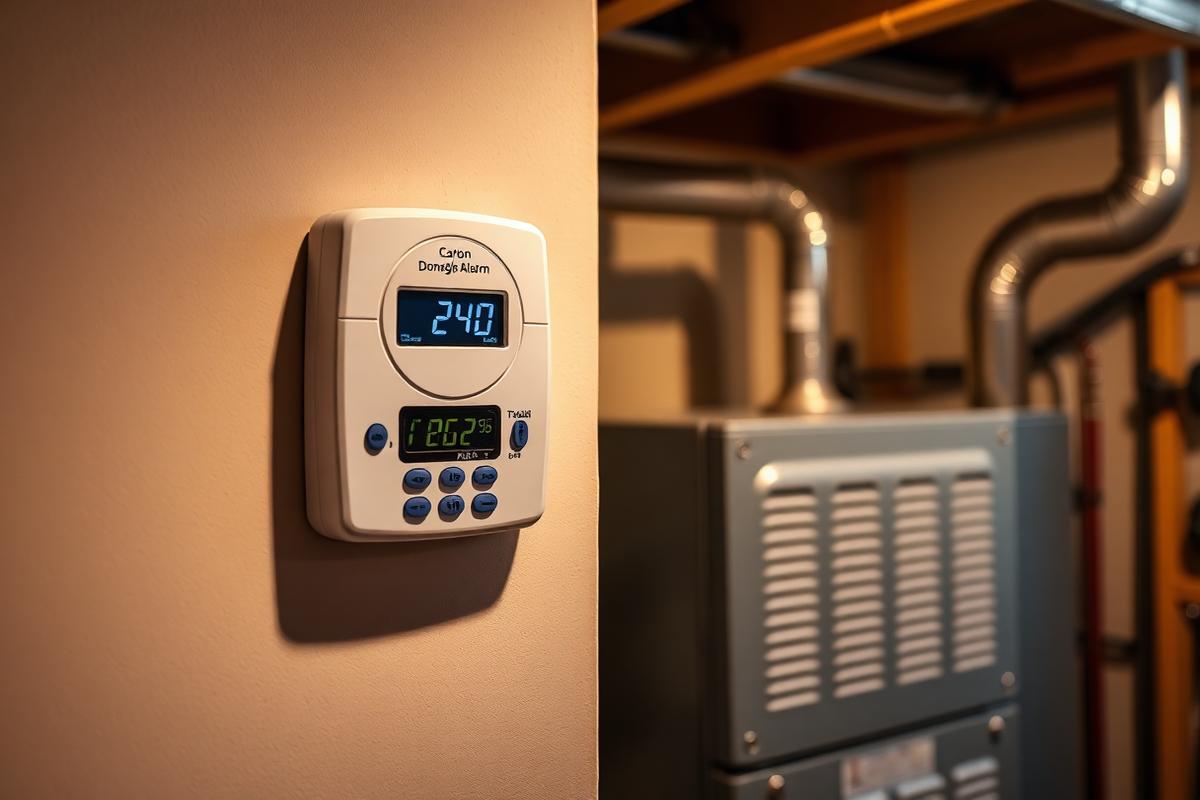
Alarms should not be covered by furniture, curtains, or other objects that could restrict airflow around the sensor. Locations near heating vents or directly above fuel-burning appliances may also be unsuitable. An alarm should not be placed in a kitchen unless the manufacturer specifically approves that location.
Homeowners should consider whether an alarm can be heard from every sleeping area. In larger or multi-story homes, multiple units may be necessary. Interconnected alarms can provide broader notification because an event detected by one compatible device may cause other linked alarms to sound.
A carbon monoxide alarm does not replace routine equipment maintenance. Furnaces, water heaters, chimneys, fireplaces, and other fuel-burning systems should be installed correctly and inspected according to professional and manufacturer recommendations. Portable generators should only be operated outdoors and kept away from doors, windows, and vents.
Smart Features Can Improve Awareness
Traditional CO alarms provide an audible warning within the home. Smart models may supplement that warning with voice notifications, digital readings, environmental monitoring, and alerts delivered to a connected phone.
The X-Sense XC0M-iR smart carbon monoxide alarm with voice alerts device uses an electrochemical CO sensor and connects directly through a 2.4 GHz Wi-Fi network. It includes voice alerts and app-based monitoring, allowing users to receive information through a compatible mobile device.
The XC0M-iR also combines carbon monoxide detection with temperature and humidity monitoring. Its app can display temperature and humidity history, while Night Mode is designed to reduce unnecessary visual disturbance in dark environments. These additional measurements can provide useful environmental information, but they do not replace the alarm’s primary purpose of detecting carbon monoxide.
According to the manufacturer’s technical specifications, the unit uses one replaceable CR123A lithium battery. The listed battery life is approximately one year when the alarm is tested weekly, while the device has a maximum stated service life of 10 years. It produces an alarm level of at least 85 decibels at 10 feet.
Testing and Replacement Should Not Be Ignored
Carbon monoxide alarms should be tested regularly according to the manufacturer’s instructions. CPSC guidance recommends monthly alarm testing. Pressing the test button generally verifies that the battery, horn, and electronic circuitry are operating, but it does not independently confirm the accuracy of the sensing element.
Homeowners should respond promptly to low-battery, malfunction, and end-of-life warnings. Replaceable batteries should be changed as required, while the complete device should be replaced when it reaches the manufacturer’s specified service life or fails a test.
Beep patterns, indicator lights, voice messages, and app notifications may have different meanings. Users should keep the manual accessible and become familiar with emergency, low-battery, fault, and end-of-life signals before a warning occurs.
What to Do When an Alarm Sounds
A sounding carbon monoxide alarm should never be ignored. Occupants should move outside to fresh air, contact emergency services or the local fire department, and confirm that everyone has left the building. No one should re-enter until emergency personnel say it is safe to do so.
Residents should not remain inside to search for the source of the gas. Any appliance identified as a possible source should remain unused until it has been examined and properly serviced by a qualified professional.
Building a More Complete Safety Plan
A CO alarm is an essential warning device, but effective protection also depends on proper installation, routine testing, equipment maintenance, and a clear emergency plan. Household members should understand what the alarm sounds like, where to gather after leaving the property, and whom to contact during an emergency.
By combining dependable detection with informed household practices, families can improve their ability to recognize and respond to carbon monoxide before exposure becomes life-threatening.


